В связи с радиационным и химическим (в основном солями тяжелых металлов) загрязнению водоема-охладителя ЧАЭС, осуществляются комплексные многолетние исследования влияния радиационного фактора на его гидробионтов. Отделом радиационного мониторинга ГСНПП Экоцентр (А.А.Залиским) совместно с Институтом гидробиологии НАН Украины, Киевским университетом имени Тараса Шевченко и другими учреждениями делается попытка оценить отклик водной экосистемы и отдельных ее составляющих на радиационное воздействие в условиях одновременного химического загрязнения. Указанной группой ученых было установлено, что с одержание растворенных в воде 90Sr и 137Сs составляет порядка 8,49×10¹⁰ Бк и 1,77×10¹¹ Бк соответственно; запасы адсорбированных на взвесях 90Sr и 137Сs соответственно – 8,48×10⁸ Бк и 4,42×10¹⁰ Бк. Запасы 90Sr и 137Сs в донных отложениях водоема-охладителя оцениваются величинами 5,55×10¹³ Бк и 5,55×10¹³ Бк соответственно.
Площади, занятые высшей водной растительностью в водоеме-охладителе, составляют около 10 га (*0,4 % площади водоема).
Видовой состав фитопланктона водоема-охладителя ЧАЭС сформировался на основе фитопланктона река Припять, откуда он заполнялся водой и происходит его постоянное дополнение. Флористический состав фитопланктона достаточно разнообразен. На данный момент насчитывается до 337 обычных, широко распространенных в пресноводных водоемах эвритермных видов различных групп водорослей, среди которых самым наибольшим разнообразием отличались зеленые (Chlorophyta), диатомовые (Bacilllaryophyta) и сине-зеленые (Cyanophyta).
Зоопланктон водоема-охладителя ЧАЭС составляют широко распространенные пресноводные формы. Самое большое разнообразие наблюдалось среди коловраток (Rotatoria), ветвистоусых (Cladocera) и веслоногих (Copepoda) ракообразных. В первые года формирования зоопланктона насчитывали до 150 видов беспозвоночных, но вследствие эксплуатации водоема-охладителя их количество уже к 1980 году уменьшилась на 40 %. Биомасса зоопланктона в среднем, составляет 0,3-1 мг/л за вегетационный период.
Радиация не могла губительно подействовать на фито- и зоопланктон, поскольку эти группы гидробионтов очень стойки к ионизирующему излучению. Смертельные дозы радиации для различных водных организмов составляют: для простейших – 600 крад, для водорослей – 120 крад, для моллюсков – 20-109 крад, для ракообразных – 1,5-56,6 крад, для рыб – 1,1-5,6 крад. Многие из водорослей способны выдержать облучение дозами 3-16 тыс. рад и больше, а для отдельных смертельные дозы достигали в экспериментах 1-2,5 млн. рад .
Максимальная доза, полученная за вегетационный период 1986 г., составляла 3,65 рад. Сравнение указанной величины с летальной дозой для водорослей не вызывает сомнения в отсутствии повреждающего действия радиации на фитопланктон. Это же касается и зоопланктона.
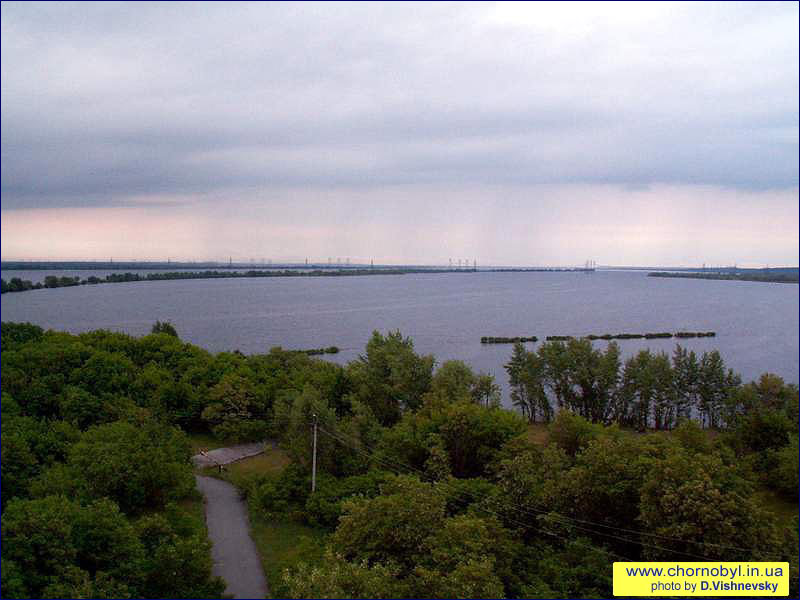
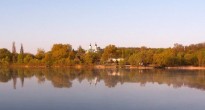
Вид на Пруд-охладитель ЧАЭС
Донная фауна беспозвоночных водоема-охладителя ЧАЭС формировалась преимущественно через занесение организмов и их личинок из р. Припять. Она состоит преимущественно из нематод, олигохет, личинок хирономид и моллюсков.
Кроме мягкого бентоса, значительную продукцию в водоеме создают моллюски, преимущественно дрейссена (Dreissena polimorpha). К радиации моллюски достаточно стойки, ибо летальная доза для них равняется не менее 20 крад, поэтому радиационная ситуация водоема-охладителя не может на них влиять отрицательно.
Рыбное население водоема-охладителя ЧАЭС в доаварийный период состояло из 33 видов, которые относятся к 7 семействам, среди которых самым большим видовым богатством отмечалась семейство карповых (19 видов). Иные семейства (окуневые, сомовые, щуковые и др.) представлены 1-2 видом. Основная часть видов рыб попала в водоем-охладитель из реки Припять и ее пойменной системы при сооруженнии водоема, а некоторые (белый и пестрый толстолобики, сом канальный, форель, большеротый буффало) были завезены сюда в 1983-1985 гг. для рыбоводства.
В доаварийный период загрязнение рыбы водоема-охладителя ЧАЭС осуществлялось преимущественно 137Cs и 144Ce, содержание которых у различных видов находили в пределах 3-9,6 и 1,8-5,6 Бк/кг соответственно. Концентрация других радионуклидов (134Cs, 65Zn, 58Co и др.) обычно не превышала 2-2,6 Бк/кг.
Во время аварии на ЧАЭС рыбное население претерпело сильное радиоактивное облучение и все последующие годы находились в условиях хронического действия малых доз радиации. Исследование уровня и динамики накопления радиоактивных веществ в органах и тканях рыб различных трофических звеньев показали, что зависят они прежде всего от характера питания.
Наименее загрязнены растительноядные рыбы, которые находятся во втором звене трофической цепи. Из них изучался преимущественно белый толстолобик, который питается, как известно, фитопланктоном и детритом. Среди исследованных органов и тканей белого толстолобика максимальная удельная активность основного загрязнителя – 137Cs зафиксирована в мышцах. В 1986 г. активность в них достигала в среднем 140 кБк/кг, мощность дозы внутреннего облучения составляла 0,13 рад/сут.
Наибольшие количества радиоактивных веществ накапливали типичные хищники – сом обыкновенный, судак, щука. К 1995-1996 гг. уровень загрязненности рыб водоема-охладителя радионуклидами стабилизировался. Его значения по 137Cs в мышцах планктофагов и большей части бентофагов в данное время равно 2-7 кБк/кг, у хищников – 7-27 кБк/кг. Максимальная скорость снижения содержания радиоизотопов наблюдалось у рыб на протяжении двух первых послеаварийных лет. За 10-летний послеаварийный период уровень удельной активности 137Cs в мышцах хищных рыб снизился в 7-10 раз, у других – в 25-60 раз, а у большинства других гидробионтов, многие из которых входят в рацион рыб, – более чем в 50 раз.
За послеаварийный период уровень радиационного загрязнения воды и биоты водоема-охладителя ЧАЭС существенным образом снизился. Вследствие оседания радионуклидов на дно водоема и аккумуляции их донными отложениями и гидробионтами, вода стала мало загрязненной, хотя ее качество остается хуже, чем требуется гигиеничными критериями.
Максимальная скорость снижения содержания 137Cs в рыбах и иных гидробионтах наблюдалась в первые 1-2 года после аварии. До 2004-2005 гг. удельная радиоактивность в мышцах рыб, в основном, стабилизировалась. Уровень равновесного состояния для планктонофагов составляет в среднему 5-7 кБк/кг, для хищных рыб – возле 21-27 кБк/кг.
Уменьшается численность и биомасса ведущих форм фито- и зоопланктона. Установлена смена доминирующих видов в составе ихтиофауны. Отмечено снижение темпа роста, упитанности и плодовитости у многих видов рыб. Во всех этих и иных изменениях влияние радиации явным образом не заметно. Основным фактором, который вызывал ухудшение репродукционных показателей рыб, является обеднение водоема кормовыми ресурсами. В то же время снижения плодовитости некоторых видов рыб, аномалии развития их репродукционной системы связаны с влиянием радиации, а также, по-видимому, с действием солей тяжелых металлов.
Литература об экологии водоемов зоны :
- Гащак С. П., Петров М. Ф., Чижевский И. В. и др., Радиоэкология дикого кабана и косули европейской в условиях Чернобыльской зоны отчуждения – Киев-Чернобыль, 1998. – 44 с.
- Гайченко В.А., Жежерин И.В., Небогаткин И.В. Изменения видового состава и численности мелких млекопитающих в 30-км зоне ЧАЭС в послеаварийный период // В сб.: ”Млекопитающие Украины”. – К.: Наукова думка, 1993. – С.153-164.
- Пикулик М.М., Дробенков С.М. Амфибии и рептилии // Животный мир в зоне аварии Чернобыльской АЭС. Радиоактивное загрязнение животных различных групп. – Минск: Навука і тєхніка, 1995. – С.55-59.

Публикации по теме:
- Искусственные рифы на пруду-охладителе ЧАЭС. Применение живых фильтраторов для очистки пруда-охладителя ЧАЭС. Знакомим читателей сайта chornobyl.in.ua с уникальными предложениями ученых, которые после...
- Зона отчуждения: реки и озера Основная часть территории чернобыльской зоны отчуждения находится в междуречье рек...
- Брошенные эмбрионы в брошенной лаборатории возле ЧАЭС Фотографии состояния образцов рыб, икры и мальков в брошенной научной...
- ЧАЭС видео: ручной сом Гоша новая достопримечательность Чернобыльской АЭС Уникальное видео о прирученном соме из Пруда-охладителя Чернобыльской АЭС. Персонал...
- Рыжий лес: Обоснование необходимости ликвидации радиационно-пораженного леса возле ЧАЭС Ликвидация последствий аварии на ЧАЭС связана также с большим объемом...
- Река Припять Река Припять - характеристика загрязнения водоема радионуклидами, фото уникальных видов...
- Брошенный полигон Чистогаловка – руины науки в зоне отчуждения ЧАЭС История одного научного полигона в зоне отчуждения ЧАЭС. Полигон "Чистогаловка"...
- Рефераты диссертаций на тему Чернобыль и последствия катастрофы на ЧАЭС Рефераты научных исследований по теме Чернобыль и последствий аварии на...